



Your guide for Hair Transplantation
latest techniques available, and what you can expect in terms of results.
Trust the experts at Aurora Group to help you achieve the results you desire.
Hair transplant operation
Techniques used in hair transplantation
FUE Technology
Hair transplantation techniques vary depending on the individual case, however, common techniques used are FUE (Follicular Unit Extraction) and FUT (Follicular Unit Transplantation). FUE involves the extraction of individual follicular units from the donor area, using a micromotor and medical forceps, before transplanting them into the receiving area. This technique is often favored as it results in minimal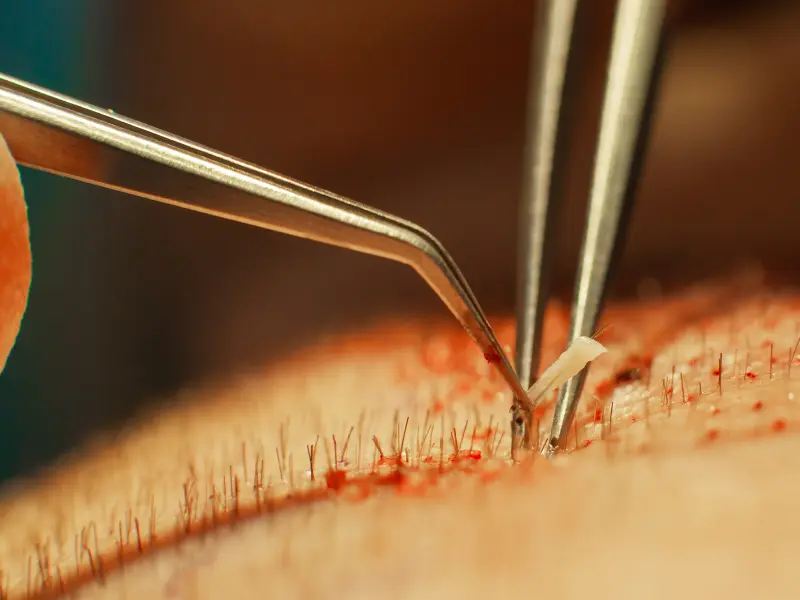
scarring. FUT involves the removal of a strip of tissue from the donor area, before extracting the individual follicular units and transplanting them into the receiving area. This technique typically results in a linear scar in the donor area.
Mega FUE Technology
The Mega FUE Technology is a two-session treatment that transplants a maximum of 8000 follicles, giving the hair more density. The Ultimate FUE differs from regular FUE in that it uses a medical scalpel made of fine blue sapphire, which prevents damage.
DHI Technology
The doctor carefully opens channels in the areas of baldness to be treated with Choi Pen Implanters. Then, with one click, simultaneously implants the extracted follicles – which are up to 3500 in number. The whole process takes around 6-8 hours.
Ultimate FUE
The main difference between Ultimate FUE and regular FUE is the type of medical scalpel used. With Ultimate FUE, a fine blue sapphire scalpel is used which helps prevent any damage to the scalp during the picking process.
The Extremely DHI Technique follows the same stages as the DHI technique, but it allows the doctor to transplant up to 5,000 follicles in just 12-15 hours.
Candidates for hair transplantation
Things to keep in mind before getting a hair transplant:
- Research the different types of hair transplants and which one would be best for you. -Be sure to consult with a few different surgeons before making your decision.
- Be aware of the possible risks and complications associated with hair transplants.
- Be sure to ask your surgeon any questions you may have before undergoing the procedure.
Tips after hair transplantation
- Be sure to keep your head elevated for the first few days after the surgery.
- Avoid vigorous activity for at least a week to allow your scalp to heal.
- Gently clean your scalp with a mild shampoo and avoid sun exposure for a few weeks. Be sure to follow all of your doctor’s instructions for care after your surgery.
The hair transplant process consists of several stages:
- Harvesting the donor’s hair
- Preparing the recipient site
- Transplanting the hair follicles
- Monitoring the transplanted hair Each stage of the hair transplant process is important in achieving desired results. In order to ensure successful hair transplantation, it is important to work with a qualified and experienced hair transplant surgeon.
